Guides
Security Across Multiple Residences
Several properties, several installers, several standards, and no shared record. How to establish one baseline across residences that were never designed to be managed together.
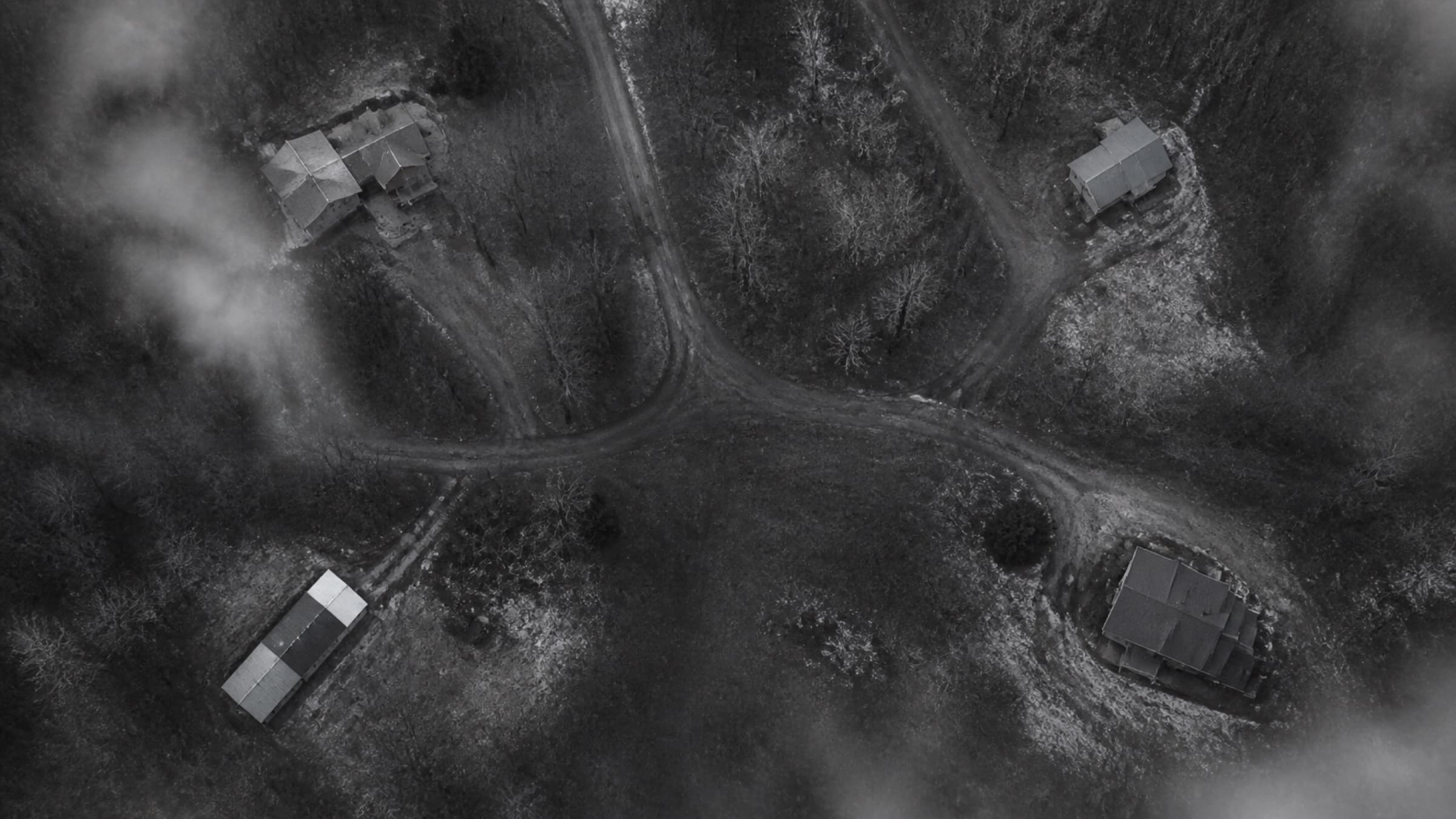
A single well-secured residence is a solved problem. The design questions have known answers, the equipment is mature, and a competent local installer working against a competent specification will produce a good result.
Several residences is a different problem, and the difference is not one of degree. It is a coordination problem wearing the costume of a technical one.
Why the second property changes the discipline
The first residence is designed once, by one party, against one set of conditions. Every subsequent property is typically acquired years apart, in a different jurisdiction, secured by a different installer working to local practice, monitored under a separate contract, and staffed by people who have never met their counterparts elsewhere.
Nothing in that sequence is a mistake. Each decision was reasonable when it was made. But the aggregate result is a portfolio in which no two properties are comparable, no one can state the current posture of all of them, and the security of the whole is set by whichever property received the least attention.
That last point deserves emphasis. A portfolio's effective posture is not the average of its properties. Anyone assessing the family as a target will assess the weakest point of access, and the weakest point is frequently the property that is occupied least — the one that receives the least scrutiny precisely because nobody is there.
Occupancy drives attention, and attention drives maintenance. The property that gets forgotten is the property that was designed to be forgotten.
The three artifacts that make a portfolio manageable
Bringing several properties onto a common footing requires three documents. They are unremarkable individually. Together they convert a collection of houses into something that can be managed.
A per-property posture record. For each property: what systems are installed, when they were commissioned, who monitors them, what the response arrangement is, when they were last serviced, and what the known deficiencies are. The last field is the one most often omitted and the one most worth having. A property with two documented deficiencies and a remediation date is in better condition than a property with none listed, because the second one has not been looked at.
A consolidated access register. Across all properties: every person and entity holding physical or system access, what they hold, why they hold it, and under what condition it ends. Building this for the first time is the most reliably surprising exercise in this work. Access accumulates through a mechanism nobody designed — a contractor given a code for a renovation, a neighbour holding a key from a decade ago, a former staff member whose credential was never revoked because revocation required a site visit.
A baseline standard. One written statement of what "adequately secured" means for this family, expressed in terms that a local installer in any jurisdiction can be held to. Without it, every property is secured to the standard of whoever was engaged, and there is no basis on which to say that one of them is inadequate.
Remediate by exposure, not by property
Once the baseline exists, every property can be measured against it, and the gaps become a list. The instinct is to work through the list property by property, finishing one before starting the next. That instinct should be resisted.
Working property by property means the last property on the list stays at its existing standard for the entire duration of the program, which may be a year or more. If that property happened to be the weakest, the portfolio's effective posture has not improved at all until the program is nearly finished.
The alternative is to sequence by exposure across the whole portfolio: address the most significant gap wherever it sits, then the next. This is administratively harder — it means engaging several installers concurrently and coordinating them — but it improves the portfolio's actual posture from the first week rather than the last.
This is also where a single coordinating party earns its position. Sequencing by exposure requires someone holding the full picture who can direct work across jurisdictions and vendors. No individual installer can do it, and no family office should have to.
Occupancy is a security state
A property that is fully occupied, a property with staff present and family absent, and a property that is empty for a season are three different security problems in one building. Most residential programs treat them as one.
Designing for occupancy states means deciding in advance what changes when the state changes: which zones are armed, which access is suspended, what the monitoring sensitivity is, who is notified, and what the expected response time becomes. It also means the state is recorded somewhere, so that a monitoring provider receiving an alarm knows whether an occupied-house response or an empty-house response is appropriate.
Families often discover that their providers have no notion of occupancy state at all, and that the arrangement they have been paying for assumes a permanently occupied home.
Vendors, and the specification problem
A multi-property program will involve several vendors. That is unavoidable and not a defect — local presence matters for response times, and a single national provider is rarely the best choice in every jurisdiction.
What matters is that all of them are engaged against the same specification rather than each writing their own. A vendor asked to "secure this property" will propose the system they sell. A vendor asked to meet a written baseline will either meet it or say why they cannot, and both answers are useful.
The specification should also define the interfaces: what the vendor reports, to whom, on what cadence, and what constitutes an event requiring escalation beyond their own procedure. Vendors are generally willing to work this way. They are rarely asked to.
What good looks like
A well-run multi-residence program is not identifiable by its equipment. It is identifiable by the speed with which three questions can be answered.
What is the current posture of every property? Who holds access to each, and on what basis? If an alarm activates at the least-occupied property at three in the morning, what happens, and who is responsible for it happening?
A family with one excellent residence and three unmanaged ones cannot answer those questions. A family with four adequate residences and a maintained record can. The second arrangement is the stronger one, and it costs less.
Filed under